Introduction
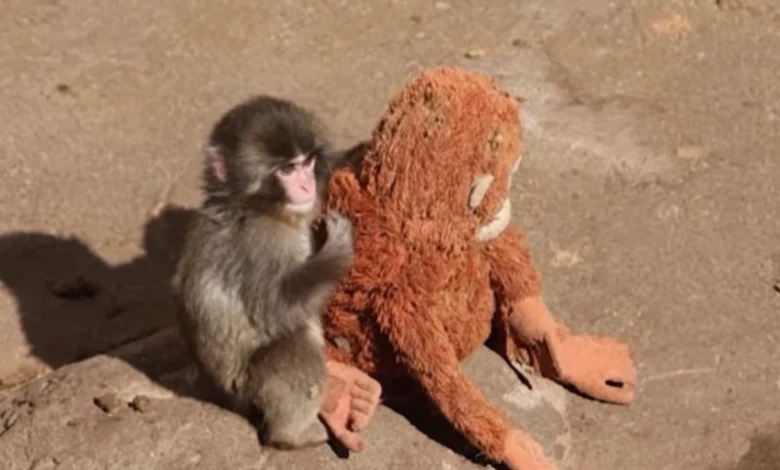
Meet Punch the monkey. He’s a tiny Japanese macaque rescue who grabbed the internet by heartstrings. Born in a Japanese zoo during the hot, sticky summer of July 2025, this little guy got dealt a rough hand right from the start. His mother, probably exhausted and confused as a first-time parent, simply walked away. She left him right after birth .

Imagine being tiny, blind, and alone. That was Punch.
But here’s where the story gets good. Zoo staff at Ichikawa City Zoo refused to let this abandoned monkey rescue story end in sadness. They stepped in. They became his family. And they introduced him to something that would change everything: a soft, orange orangutan stuffed toy .
That toy became his anchor. His security blanket. His best friend.
This is the Punch the Monkey story—a tale of macaque hand-rearing, second chances, and the messy, beautiful reality of teaching a baby monkey how to be a monkey. It’s about rescued macaque care, the challenges nobody talks about, and what happens when a hand-reared Japanese macaque tries to find his place in the world.
And yeah. It involves a plushie that went viral.
The Day Punch Entered the World: A Japanese Macaque Rescue Begins
July 26, 2025. That’s the date etched into zoo records. A baby macaque born July 2025 came into the world weighing barely 500 grams—about the size of a small apple .
His mother? She wanted nothing to do with him.
It happens sometimes. In the wild, Japanese macaque behavior can be brutal. First-time mothers sometimes fail to bond. Exhaustion, stress, maybe just instinct misfiring. Whatever the reason, she turned away and left her baby on the ground .
The zookeepers faced a choice: let nature run its course, or intervene.
They chose intervention.
This wasn’t just any baby macaque rescue. This was a 24/7 commitment. Newborn macaques need constant warmth. They need milk every few hours. They need the physical touch that mimics a mother’s fur . Without it, they literally fail to thrive.
So the keepers became surrogate moms. They worked in shifts. Bottles in the middle of the night. Warm incubators. Gentle handling.
But something was missing. In the wild, infant macaques cling to their mother’s belly 24/7. That constant contact regulates their body temperature and their emotions. Without it, they get stressed. They get lonely.
Enter the orangutan.
Why a Stuffed Toy Saved This Abandoned Monkey Rescue
Zookeepers tried rolled-up towels first. Then some soft blankets. Nothing clicked.
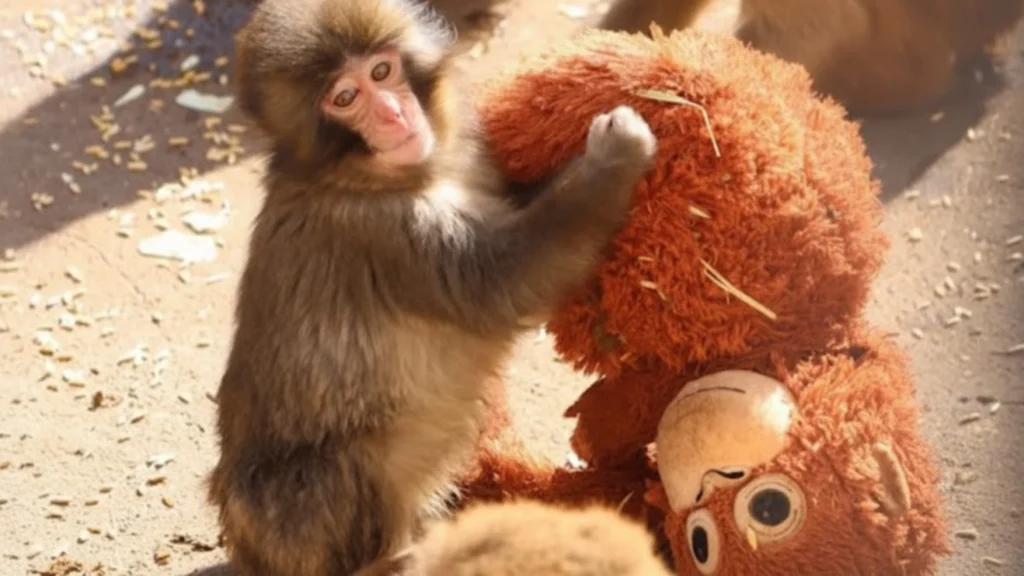
Then someone grabbed an orangutan plushie. It had long, textured fur—easy for tiny fingers to grip. It looked vaguely like a primate. It was soft and huggable .
Punch grabbed on. And he never let go.
This wasn’t just cute. This was survival. The toy became what experts call a “transitional object”—like a toddler’s blanket or a teddy bear. It provided the emotional bond with hand-reared macaques that nature intended mothers to give .
At night, when the keepers went home, Punch hugged that toy and slept. During the day, he dragged it everywhere. When other monkeys got too close or scared him, he clutched it tighter.
The toy did something else, too. It made the world care.
Videos started popping up online. A tiny monkey, smaller than a water bottle, wrapped around an orange stuffed animal. The internet melted. Hashtags exploded. #HangInTherePunch trended in Japan .
People sent messages. They sent love. One fan even started joking about forming a “Punch protection squad” to fight off mean monkeys .
But the real fight? That was just the beginning.
Learning Monkey Rules: The Hard Part of Macaque Rehabilitation
Here’s the thing nobody tells you about macaque rehabilitation: you can’t teach a monkey how to be a monkey. Only other monkeys can do that.
Punch had a problem. He’d spent his first months with humans and a stuffed toy. He smelled like people. He acted like a person. To the other monkeys in the troop, he was basically an alien .
In February 2026, the zoo decided it was time. They introduced Punch to the main monkey mountain enclosure. Dozens of macaques. All sizes. All attitudes.
It did not go smoothly.
Videos show older monkeys shoving Punch. One grabbed him and dragged him. Another screamed in his face. Punch, confused and scared, would run back to his stuffed toy for comfort .
Online, fans panicked. “Stop showing me that little monkey being bullied!” one person wrote. “I will fly to Japan and beat up the mean monkeys,” said another .
But here’s the part the internet didn’t see right away: this is how monkeys learn.
Primatologists call it socialization. In the wild, young macaques get scolded constantly. They get pushed around. They learn boundaries by crossing them and facing consequences . The zoo tried to explain this gently: “Punch shows resilience and mental strength,” they said .
Translation: he’s getting knocked down, but he keeps getting back up.
And slowly, things started to change.
Small Wins: How Rescued Macaque Care Pays Off
By mid-February 2026, the updates got better.
“Punch is gradually deepening his interactions,” the zoo wrote . He started getting groomed by other monkeys—a huge sign of acceptance in macaque society. He began poking playfully at others. He got scolded less .
The macaque hand-rearing was working. Not perfectly. Not without scars. But working.
Then came a plot twist. Punch’s biological mother—the one who abandoned him—gave birth again. A new baby boy named Chimi arrived on February 15, 2026 .
This time, the mother accepted her baby immediately. Chimi got the natural bonding Punch never had. But instead of being sad, the zoo saw an opportunity.
“Chimi can become a bridge between the troop and Punch,” they wrote . A younger brother. A natural connection. A way in.
It was hope. Real hope.
Meanwhile, visitors started flooding the zoo. Crowds showed up just to see Punch and his stuffed friend. The zoo had to apologize for the wait times . IKEA Japan even got involved, donating multiple replacement orangutan toys in case Punch wore out his original .
A tiny rescued monkey story had turned into a global movement.
The Hard Truth About Japanese Macaque Behavior and Rescue
Let’s pause here and get real for a second.
Japanese macaque behavior is complicated. These aren’t cute cartoon characters. They’re wild animals with hierarchies, grudges, and social rules stricter than any high school clique.
In the wild, macaque troops are structured around female bloodlines. Mothers and daughters stay together for life. Males leave when they grow up . Everyone knows their place. Everyone gets scolded if they step out of line.
Now imagine dropping a human-raised baby into that mix. He doesn’t speak the language. He doesn’t know the rules. He smells like soap and stuffed toys.
The challenges in macaque rehabilitation are enormous. You can’t just “teach” a monkey to fit in. He has to learn by getting knocked down. By making mistakes. By figuring out who’s safe and who’s dangerous .
Some rescued monkeys never make it. They stay outcasts forever. They live on the edges, never fully accepted.
But Punch? He kept trying.
That resilience is rare. It’s also why people connected so deeply. We’ve all been the new kid. We’ve all felt like we don’t belong. Watching Punch clutch his toy and try again felt personal .
Beyond Punch: Macaque Conservation and the Bigger Picture
Punch’s story is sweet, but it sits inside a much bigger reality.
Macaque conservation efforts in Japan are a mixed bag. On the one hand, Japanese macaques are protected. They’re iconic—the famous “snow monkeys” that soak in hot springs draw tourists from around the world .
On the other hand, conflicts are exploding.
As rural areas shrink and forests get cleared, macaques venture into towns looking for food. They raid crops. They break into homes. In 2022, crop damage from wild animals hit 15.6 billion yen (about $100 million), with macaques responsible for a big chunk .
Some communities have “monkey chasing squads”—paid teams that use bells, whistles, and dogs to push monkeys back into the mountains . Others resort to culling, which scientists say can actually make the problem worse by breaking up troops and scattering survivors .
Then there’s the disability angle. At places like the Awajishima Monkey Center, researchers study macaques born with physical impairments—missing hands, deformed limbs, often linked to environmental contaminants . These monkeys survive because their mothers care for them and because they adapt. They find new ways to eat, move, and socialize .
Punch isn’t physically disabled. But he’s socially disabled. He needed adaptation tools too. His stuffed toy was his mobility aid through the rocky terrain of monkey society.
What Punch Taught the World About Emotional Bonds
Here’s the part that still gets me.
Punch didn’t just go viral because he was cute. He went viral because he was real.
Millions of people watched that tiny monkey cling to his stuffed friend and saw themselves. The toy wasn’t just a toy. It was a stand-in for everything we hold onto when things get hard.
A photo from my childhood. A worn-out sweatshirt. A playlist that feels like a hug.
Scientists call it an “emotional support object.” The rest of us call it survival.
The zoo understood this. When they posted updates, they didn’t just talk about weight gain or feeding schedules. They talked about Punch’s personality. His resilience. His stubborn determination to connect .
That’s why IKEA donated those toys. That’s why thousands of people visited. That’s why the hashtag #HangInTherePunch trended for weeks .
Punch became a symbol. Not of perfection, but of trying anyway.
Life of a Rescued Macaque: What Happens Next?
So where is Punch now?
As of early 2026, he’s still at Ichikawa City Zoo. Still carrying his stuffed toy. Still figuring things out.
He interacts with more monkeys every day. Some groom him. Some ignore him. Some still scold him . But he’s learning. Slowly, awkwardly, steadily.
His brother Chimi might help bridge the gap. Blood matters, even in monkey troops.
Will Punch ever be fully accepted? Maybe. Maybe not. Some rescued macaques always remain a little outside. A little different.
But here’s the thing: Punch doesn’t seem to care. He keeps trying. He keeps showing up. And when things get hard, he still has his orange friend to hold.
That’s not a weakness. That’s wisdom.
Conclusion: Why Punch the Monkey Story Matters
The Punch the Monkey story isn’t really about a monkey with a toy.
It’s about what happens when the world fails you, and you find a way to keep going anyway.
It’s about the keepers who woke up at 3 a.m. to feed a screaming baby. The strangers online who sent love across oceans. The IKEA executives who shipped plushies to a zoo they’d never visited.
It’s about rescued macaque care and how it takes a village—human and monkey alike.
Punch was abandoned at birth. He was hand-reared by humans. He was given a stuffed friend that became a global sensation. And now, slowly, he’s learning to be a monkey.
His story isn’t finished. Rehabilitation never really is.
But if you’re looking for proof that love—messy, imperfect, stuffed-animal love—can make a difference? Look at Punch.
He’s living it.
Frequently Asked Questions
Q: What is the Punch the Monkey story?
A: Punch is a baby Japanese macaque rescue born July 2025 at Ichikawa City Zoo in Japan. His mother abandoned him at birth, so zoo staff hand-reared him. They gave him a stuffed orangutan toy for comfort, and videos of him clutching it went viral worldwide .
Q: Why did Punch’s mother abandon him?
A: His mother was a first-time parent. Sometimes, inexperienced monkeys fail to bond with their newborns. Exhaustion, stress, or natural instinct can trigger abandonment. It happens in both wild and captive settings .
Q: How do zookeepers hand-rear a baby monkey?
A: Hand-rearing a monkey requires round-the-clock care: bottle feeding every few hours, warm incubators, gentle handling to simulate mother’s touch, and gradual exposure to other monkeys. Stuffed toys often provide comfort and sensory stimulation .
Q: Is Punch accepted by the other monkeys now?
A: Slowly, yes. Early on, other monkeys bullied and scolded him. But by February 2026, Punch started interacting more, getting groomed, and playing gently with others. It’s a slow process, but progress continues .
Q: Can I visit Punch or support macaque rescue organizations?
A: Punch lives at Ichikawa City Zoo in Japan. If you’re interested in supporting macaque rescue organizations, consider groups like the Royal Zoological Society of Scotland (which supports Japanese macaques) or research centers studying macaque conservation efforts and rehabilitation .
Read More Sports Blog: Celtics vs Warriors