
When you come across something like 172.16.252.214:4300, it might look confusing at first glance—almost like a random string of numbers. However, if you have even a basic interest in networking, IT infrastructure, or web applications, this format actually tells a very clear story. It represents a private IP address paired with a specific port, and it plays a meaningful role in how internal networks, applications, and services function.
In this article, we’ll break down 172.16.252.214:4300 in a clear, casual, but expert-level way. We’ll explore what it means, where it’s commonly used, why it matters, and what security and troubleshooting considerations come along with it. By the end, you’ll have a solid understanding of this keyword and why it’s relevant in modern networking environments.


What Is 172.16.252.214:4300? A Simple Breakdown
At its core, 172.16.252.214:4300 is made up of two parts: an IP address and a port number. Each component has a distinct role, and together they point to a specific service running on a device within a network.
The IP address 172.16.252.214 belongs to the private IP range defined by RFC 1918. Specifically, addresses from 172.16.0.0 to 172.31.255.255 are reserved for internal use. This means they are not accessible directly from the public internet and are typically used within organizations, offices, data centers, or home networks.
The :4300 part refers to the port number. Ports act like doors or channels on a device, allowing different applications or services to communicate simultaneously. Port 4300 isn’t one of the most famous ports like 80 (HTTP) or 443 (HTTPS), but that actually makes it more flexible and often useful for custom applications or internal tools.
Why the 172.16.x.x Range Is Important in Networking
The 172.16.x.x private IP range is extremely popular in medium to large networks. It offers more flexibility than the 192.168.x.x range while still remaining private and secure from direct internet exposure.
Organizations often choose addresses like 172.16.252.214 because they can segment networks more efficiently. For example, different departments, environments (development, staging, production), or server clusters can all live within structured subnets of the 172.16 range.
Another major benefit is reduced IP conflicts. Since these addresses are not routable on the public internet, multiple organizations can reuse the same IP ranges internally without interfering with one another. This makes addresses like 172.16.252.214 both practical and scalable for internal infrastructure.
The Role of Port 4300 in Application Communication
While the IP address identifies the device, port 4300 identifies the specific service or application running on that device. Ports above 1024 are often referred to as dynamic or custom ports, and they’re commonly used by proprietary software, internal dashboards, APIs, or background services.
In many setups, 172.16.252.214:4300 could point to a web-based admin panel, a microservice endpoint, a database management interface, or even a development server. Developers frequently choose ports like 4300 to avoid conflicts with standard services already running on the system.
Using a custom port also adds a small layer of obscurity. While it’s not a substitute for real security, it can reduce random scanning attempts and make services less obvious within internal networks.
Common Use Cases for 172.16.252.214:4300
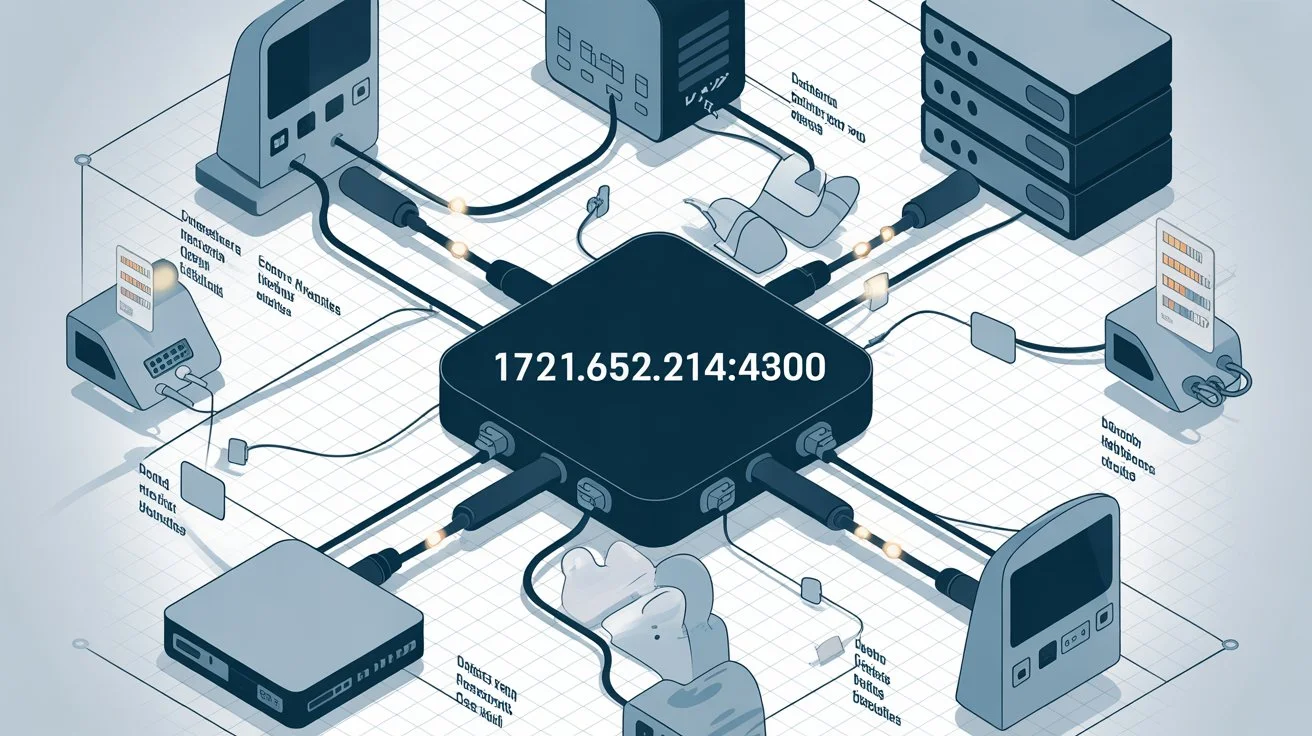
One of the most common use cases for 172.16.252.214:4300 is internal application hosting. Companies often run internal tools—such as inventory systems, monitoring dashboards, or reporting platforms—on private IPs and non-standard ports.
Another frequent scenario is software development and testing. Developers may spin up local or internal servers bound to addresses like 172.16.252.214 and expose them on port 4300 for testing new features without affecting live production systems.
This address-and-port combination can also be used in microservices architecture, where each service listens on its own port. In such cases, 172.16.252.214:4300 might represent just one service among many, all communicating securely within a private network.
Security Considerations Around Private IPs and Ports
Even though 172.16.252.214 is a private IP, security should never be ignored. Internal threats, misconfigurations, or unauthorized access from within the network can still pose serious risks.
If a service is running on port 4300, it should be protected with proper authentication, access controls, and firewall rules. Network administrators often restrict access so that only specific IPs or subnets can connect to that port.
Additionally, logging and monitoring traffic to endpoints like 172.16.252.214:4300 can help detect unusual behavior early. Private doesn’t mean invisible, and strong internal security practices are just as important as external ones.
Troubleshooting Access to 172.16.252.214:4300
When users or applications can’t connect to 172.16.252.214:4300, the issue usually falls into a few common categories. Network connectivity is often the first thing to check—ensuring that the client device is on the same network or has a proper route to the 172.16 range.
Firewall rules are another frequent cause. If port 4300 isn’t explicitly allowed, traffic may be blocked even if the IP is reachable. Both host-based firewalls and network firewalls should be reviewed carefully.
Finally, the service itself might not be running. Verifying that the application bound to port 4300 is active and listening on 172.16.252.214 can save a lot of time and frustration during troubleshooting.
How 172.16.252.214:4300 Fits Into Modern IT Infrastructure
In today’s IT environments, addresses like 172.16.252.214:4300 are everywhere, even if end users never see them. They form the backbone of internal communication between systems, applications, and services.
Cloud environments, hybrid infrastructures, and containerized platforms often rely heavily on private IP ranges. Even when services are ultimately exposed to the public internet, they usually communicate internally over addresses like 172.16.252.214 and custom ports such as 4300.
This approach improves performance, reduces exposure, and makes systems easier to scale and manage. It’s a quiet but critical part of modern infrastructure design.
SEO and Technical Context of the Keyword 172.16.252.214:4300
From an SEO and technical content perspective, 172.16.252.214:4300 often appears in logs, documentation, troubleshooting guides, or user queries trying to understand a mysterious address they’ve encountered.
People searching for this keyword are usually looking for clarity—what it is, whether it’s safe, and what it does. Writing expert yet approachable content around such keywords helps bridge the gap between raw technical data and real-world understanding.
That’s why explaining both the technical meaning and practical implications of 172.16.252.214:4300 is so valuable for readers and search engines alike.
Final Thoughts on 172.16.252.214:4300
At first glance, 172.16.252.214:4300 might seem like just another technical identifier. In reality, it represents a powerful and flexible concept in networking: a private device hosting a specific service within a controlled environment.
Understanding how private IP addresses work, why custom ports like 4300 are used, and how they fit into modern systems gives you a clearer picture of how networks truly operate behind the scenes. Whether you’re a developer, IT professional, or simply a curious reader, this knowledge is increasingly relevant in today’s connected world.